hole-size
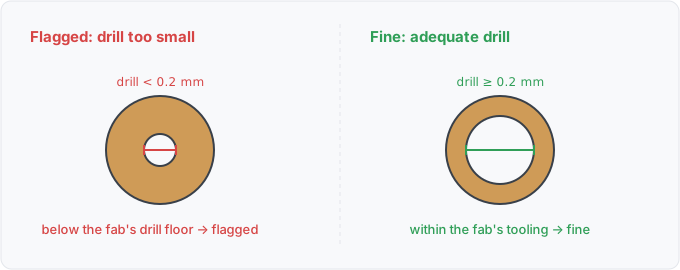
A via's drill is smaller than the loosest common mechanical-drill floor (0.2mm).
Remedy 
Enlarge the drill to the fab’s minimum. Left as it is, the order is either rejected or the via is silently upsized, and the clearances around it move with it.
What it means 
A via whose drill diameter is below 0.2mm, the smallest mechanical drill of the loosest mainstream capability set (the corpus JLCPCB rules).
Why engineers want it 
Drill size is a hard tooling limit. Below it a fab either rejects the design or substitutes a larger drill, which silently changes annular rings and clearances.
Impact 
Order-time rejection, or a board that differs from what was reviewed.
Scope note 
Same floor-default posture as track-width; per-design values are WS3-006. Pad through-holes wait on pad-level drill facts; this rule covers vias, where the tiny drills actually happen.
Query structure 
select nets with any via drilled below the floor.
select N in board.nets where count(V in N.vias where drill(V) < 0.2mm) >= 1
Reads: board.copper. Tier P.