intent/protection-ovp
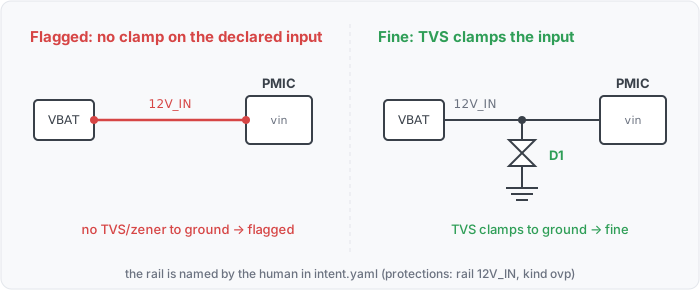
A rail the design intent declares needs OV protection has no TVS/zener clamp.
Remedy 
Fit the over-voltage clamp the intent declares for this rail, chosen to conduct below the lowest absolute maximum the rail feeds.
What it means 
The design intent declares that a named rail must be over-voltage protected. This rule fails when the
declared rail carries no clamp: it probes that exact net for a TVS or a zener among its components, and
a declared rail with none is flagged. It keys on the declared net NAME (not the rail-role heuristic,
which misses names like VBATT01 that carry no voltage token), so an input rail the customer names
explicitly is checkable.
Why engineers want it 
An input that can see a transient (a battery rail, an off-board connector) is supposed to have a clamp that shunts the spike to ground before it reaches downstream silicon. Whether a given rail was intended to be protected is an architecture decision, not something the netlist states, so the intent declaration names the rail and this rule verifies the clamp is actually on it.
Impact 
A rail the design was intended to protect has no OV clamp, so a transient reaches downstream parts: latch-up, degraded silicon, or an immediate failure on a hot-plug or load-dump event.
Scope note 
ovp is realized by a TVS or a zener on the rail (component.class tvs/zener). It is one of the
per-kind protection rules (intent/protection-ovp, intent/protection-discharge), each emitted only
when the declaration carries that kind, so distinct review items bind independently. The rule iterates
the declared protections and probes the design; it never derives the protected-rail set from the
netlist.