power-tap-conflict
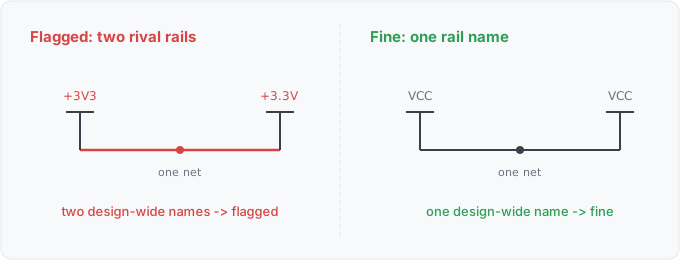
One net is tapped by two different design-wide names (power symbols or global labels).
Remedy 
Settle on one spelling for the rail and change every tap to it. Confirm afterwards which consumers moved, since the two names may have been feeding what everyone believed were separate supplies.
What it means 
One net’s collapsed alias list holds two or more distinct DESIGN-WIDE names: power-symbol rails or global labels (rank 0 in the docs/22 scoping model).
Why engineers want it 
Design-wide names unify by name across every sheet. Two of them on one net means every tap of EITHER name anywhere in the design lands on this net, so a wire joining a +3V3 symbol to a +3.3V symbol does not just alias two spellings, it merges two design-wide rails. That is either a real short drawn with symbols or a naming split that scatters one rail’s story across two names.
Impact 
Merged rails (a 5V and 3V3 net joined through a mislabeled tap) are a power-integrity defect; split naming corrupts rail-level review and any per-rail analysis.
Scope note 
Design-wide names only: a rail’s local nickname (a sheet label on the VCC net) is normal aliasing and stays quiet. Netclass consistency (one net, two netclasses) is NOT covered: netclasses live in the KiCad project file, which the reader deliberately stubs (OUT_OF_SCOPE.md). Formats whose readers emit every label at rank 0 (xschem, gEDA inline names) get the strict interpretation: any two names on one net are rivals there.
Query structure 
select nets carrying two or more distinct rank-0 names.
select N in nets where count(distinct name : name in aliases(N), design_wide(name)) >= 2
Reads: net.attributes. Tier R.