single-pin-net
A net connects to fewer than two pins (a floating stub), and is not an intentional no-connect.
Remedy 
Wire the stub to whatever it was meant to reach, or mark the pin no-connect if it is genuinely unused, so the intent is recorded rather than left to be guessed at.
What it means 
A net that connects to fewer than two pins. A signal wired to exactly one thing, or to nothing, is almost always a mistake.
Why engineers want it 
Schematic capture is manual wiring. It is trivial to leave one end of a wire floating, misspell a net label so two wires that should join do not, or delete a part and orphan the stub that fed it. Every ERC tool ships this check because it is the single most frequent capture slip.
Impact 
High frequency, near-zero false positives once no-connect is handled. A dangling net is a signal that silently does nothing.
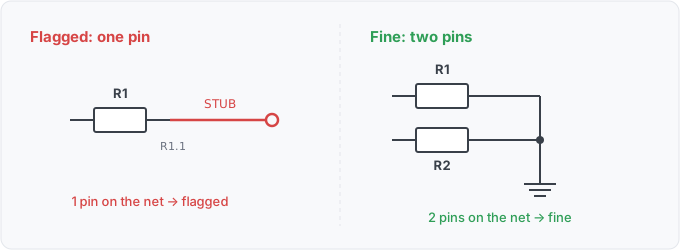
The one subtlety 
A pin deliberately marked “not connected” is a single-member net on purpose, so the rule excludes intentional no-connects: a tool-generated “unconnected-…” net name, an “nc_”/“no_connect” tag, or a connected pin whose electrical type is NO_CONNECT. This no-connect awareness removes the demo’s biggest false positive (WS3-002).
Query structure 
select the nets, exclude the intentional no-connects, report the rest.
select N in nets where count(N.connections) < 2 and not intentional_nc(N)
Reads: net.names (the no-connect name markers), net.pin_count, pin.no_connect (via pin electrical type). Tier P.